
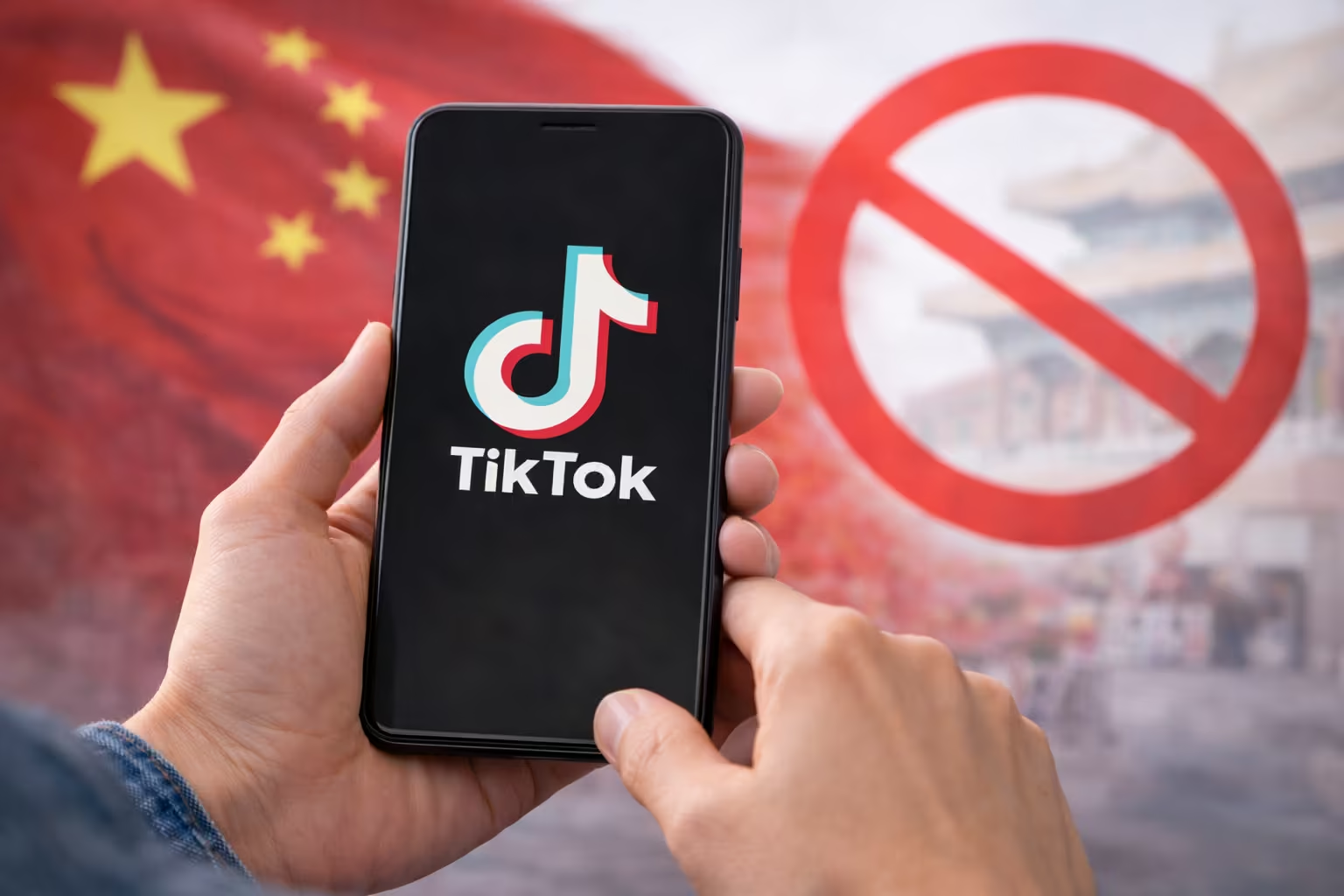
Have you ever wondered if TikTok is banned in China? You’re not the only one. In the U.S., TikTok seems like one app worldwide. But, the truth is different, causing confusion.
TikTok is owned by ByteDance. Yet, in mainland China, people use Douyin instead. This is because Douyin meets China’s internet rules and offers local services. This difference explains why some think TikTok is banned in China, even though it’s more about app setup.
So, can you use TikTok in China? For most, TikTok is hard to access like in the U.S. This is why many say TikTok is banned in China. It’s really about China’s unique app system.
In this article, we’ll explore what happens when you try to open TikTok in China. We’ll also compare TikTok and Douyin. Plus, we’ll discuss how ByteDance apps work under different rules and why China’s internet controls matter.
We’ll talk about the Great Firewall’s impact on access. We’ll also cover what tourists and expats can expect. And why this debate is important in U.S. policy talks.
To keep things clear, let’s break down three key points. Availability means if TikTok is available for daily use. Distribution is if app stores and phone settings make it easy to get. Network access is if the internet lets the app work once installed.
Is TikTok Banned in China
Americans often wonder if TikTok is allowed in China. The answer depends on what you mean by “allowed.” In everyday life, TikTok is not available in China for many people. This gap between policy and reality causes confusion.
The short answer vs. the real-world user experience
In the U.S., TikTok feels universal. But in mainland China, users face a different reality. They often can’t access TikTok or experience unreliable connections.
Most Chinese residents use Douyin instead. This shows how the app’s availability affects people’s habits.
When people search for why TikTok is banned in China, they’re looking for clarity. But what really matters is how the app works in practice. If it doesn’t function well, users quickly switch to other options.
Why TikTok and China is a confusing question for U.S. readers
The confusion is understandable. TikTok is owned by ByteDance, a Chinese company. This makes it seem like the app should be widely used in China. But the branding split adds to the confusion.
The term “banned” can have different meanings:
- Official rules that shape what apps can operate at scale
- App distribution through domestic stores and approval systems
- Network access that affects whether a service loads and works
- Practical use like account setup, updates, and day-to-day reliability
What people in China actually use instead of TikTok
In China, people use Douyin instead of TikTok. Douyin is built for local phones and services. It meets local compliance needs, making it the go-to app for many.
So, when people ask if TikTok is allowed in China, the answer is clear. Most users prefer Douyin. Although both apps are under ByteDance, they offer different experiences.
TikTok vs. Douyin: Same company, different apps
For many U.S. readers, the TikTok vs Douyin differences can feel confusing at first. Both are owned by ByteDance but serve different audiences. This split shapes what you see, do, and the rules you follow.
How ByteDance operates TikTok and Douyin separately
ByteDance runs TikTok and Douyin as two separate short-video platforms. TikTok targets global markets with international teams and partnerships. Douyin is for mainland China, with its own app licenses and rules.
This separation isn’t just about language. It affects product choices, safety, and how each app fits into daily life.
Key differences in content, features, and moderation
One clear difference is in trends and recommendations. Each app’s feed is tailored to its audience, leading to different viral topics and creators. Even similar videos can lead users in different directions.
- Douyin features focus on local commerce and lifestyle discovery, with in-app services for real-world purchases.
- Douyin moderation follows domestic rules and standards within mainland China.
- TikTok’s features are shaped by international markets, with varying policies and expectations.
Why Douyin is built for China’s internet ecosystem
Douyin is designed for mainland China’s unique environment. Regulation, network controls, and local approvals shape how apps operate. This makes China’s internet ecosystem apps feel more integrated, with easier access to payments and local merchants.
So, ByteDance’s TikTok and Douyin aren’t just clones. They’re two apps tailored to the realities of two different internet systems.
Why TikTok isn’t available in mainland China
Ever wondered why TikTok isn’t in China? It’s all about policy and design. ByteDance makes different apps for different places. China has its own rules for apps, how they start, and how they work every day.
Douyin is the app for China. It meets local rules and needs. TikTok, on the other hand, is for the world.
China’s internet controls and app distribution rules
China’s internet has its own rules. These rules affect how apps work and connect. They also impact tools apps use.
Getting an app in China is tough. It needs licenses, reviews, and checks. Douyin makes it easier because it’s made for China first.
Data storage, compliance, and local regulatory requirements
Big platforms must follow China’s data rules. This includes how they store and handle user data. They also need to meet local operational needs and handle requests quickly.
Creating a China app is simpler. It lets ByteDance follow local data rules without changing TikTok worldwide.
Content governance standards and platform responsibility
China has strict rules on what you can say and do online. These rules are different from the U.S. and are enforced fast.
Platforms must catch and stop risky content early. They also need to control how it spreads. This affects how they suggest content and moderate it, making TikTok not available in China as we know it.
How China’s “Great Firewall” affects TikTok access
For many Americans, the Great Firewall TikTok question is simple: what happens when you open the app in China. China’s filtering system combines tech blocks with rules for service providers. This means many foreign platforms act differently inside the country.
That’s why you might hear TikTok is blocked in China, even if it’s on your phone. When you use local mobile data or hotel Wi-Fi, the app might not work right. You might see a blank feed, failed sign-ins, and videos that freeze.
These issues are due to mainland China’s network restrictions. TikTok wasn’t made for everyday use in China. Instead, ByteDance’s Douyin is the go-to app for locals, with its own hosting and policies.
In simple terms, China’s internet rules can cause slow connections and missing features. Even when the app opens, updates, messaging, and uploads can act differently than in the U.S.
- Network controls can interrupt or limit foreign app traffic.
- App design choices matter because TikTok and Douyin are run as separate products.
- Account context can affect cross-border app access for people arriving with a U.S. profile.
These details are especially tough for tourists, students, business travelers, and expats. They expect TikTok to work the same everywhere. But when you use local networks, the experience can change quickly. It often depends on where you are and how you’re connected.
Can you use TikTok in China as a tourist or expat?
If you’re planning to use TikTok in China, it’s good to know what to expect. Even if you have the app, getting online can be tricky. Some people use Douyin for local trends and TikTok when they can.
For expats, TikTok’s performance varies by network. The same account can act differently, which surprises many.
What typically happens with a U.S. TikTok account on mainland networks
A U.S. TikTok account in China might work, but it can be slow. Comments might not update, and uploads can fail. Videos might load for a bit, then stop, especially when switching networks.
Many people use Douyin for daily scrolling and TikTok when they can get online. It’s not about the phone, but the network.
SIM cards, Wi‑Fi networks, and why access can vary
Local SIMs in China often limit TikTok access more than expected. Mainland SIMs and Wi-Fi follow the same rules, making TikTok unreliable.
But, things can change based on your settings. Hotel Wi-Fi, corporate networks, and roaming plans can affect TikTok’s performance.
- Roaming may route traffic differently than a local SIM.
- Venue Wi‑Fi can block apps more aggressively than cellular.
- Account and device configs can affect sign-in and background refresh.
Legal and practical considerations around VPN use
Some visitors try using VPNs to access TikTok in China. But, the rules and enforcement can be complex and change. VPNs can also be unreliable, especially during busy times.
There are practical downsides to using VPNs. They can conflict with venue policies, pose security risks, and expose more data than you want. It’s better to assume TikTok won’t work as expected and have backup apps ready before you arrive.
What TikTok’s China questions mean for U.S. users
In the United States, many wonder if TikTok is banned in China. This question often represents deeper concerns about fairness, influence, and rules. But, it’s not always accurate.
TikTok in the U.S. is different from its version in China. China’s internet is heavily controlled, and ByteDance has Douyin for the domestic market. This difference is crucial, as “banned” might not fully capture the situation.
The debate about ByteDance in the U.S. can be misleading. When people focus on one word, it clouds the complex issues of adapting to different laws. This leads to more confusion than clarity.
For users, the main concerns are data security. Questions about where data is stored and who can access it are key. These issues don’t disappear just because TikTok and Douyin are different.
To understand headlines better, it’s important to distinguish between different ideas:
- Questions about TikTok’s ownership are about corporate control and legal duties, not just its popularity.
- China’s internet model explains the existence of a domestic app, even with the same parent company.
- Regulations on TikTok in the U.S. are shaped by U.S. policies, which may differ from other countries.
Understanding the TikTok/Douyin difference helps clarify many claims. It makes it easier to see when someone is using a simple question to make a larger point about trust, governance, and power.
TikTok regulations around the world and how China fits in
In democracies, TikTok rules are getting stricter. But why? Some want to protect national security and keep foreign influence out. Others worry about privacy, kids’ safety, false information, and fair elections.
How countries react shows a clear divide. Some ban TikTok only on government phones or set strict data rules. Others debate removing TikTok from app stores or checking users’ ages. All these actions happen in open internet systems.
China, however, has its own way of handling social media. It prefers local apps, strict content controls, and careful app distribution. This is why Douyin is popular in China, not TikTok. China’s approach is more about building a digital wall than the policy battles in the U.S. and Europe.
For those in the U.S., here’s what matters: in China, Douyin is the go-to app, not TikTok. China’s unique digital ecosystem helps explain the ongoing debates about TikTok worldwide. These debates might soon focus more on data rules than just the app itself.